Bishopscourt Blinds / Products / Cellular honeycomb blinds
Cellular blinds, for the rooms that never quite warm up
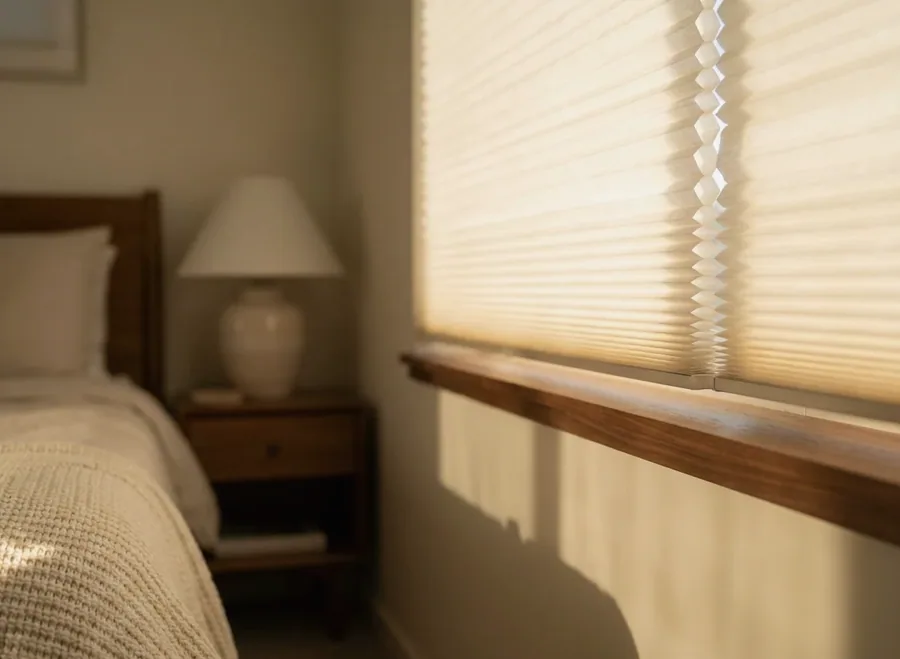
Fabric pleated into hexagonal cells that trap a layer of still air right against the glass. In a shaded, high-rainfall suburb, this is the warmest thing we fit to a window.
The insulation is the shape, not the fabric
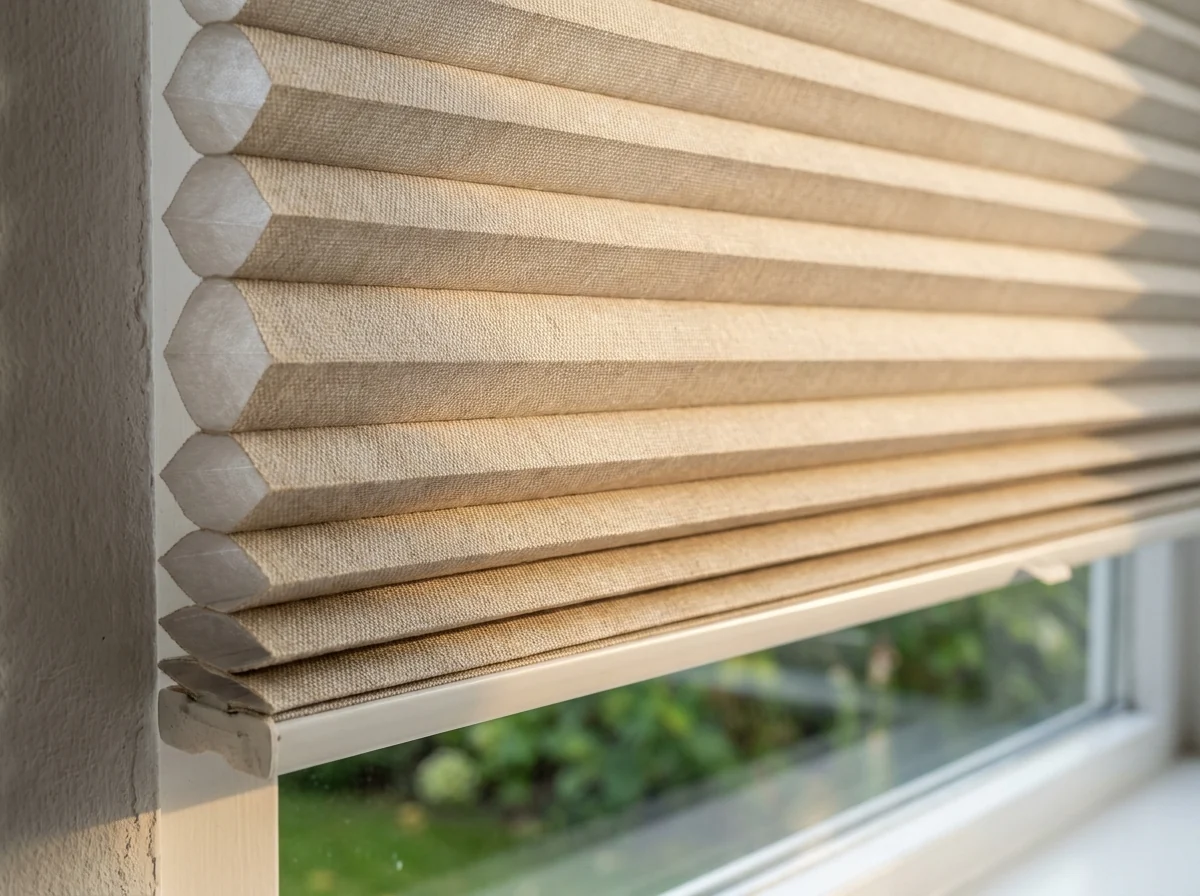
A cellular blind is made from a single fabric folded and bonded into rows of hexagonal cells — a honeycomb in cross-section. Each cell holds a pocket of still air. Still air is a poor conductor of heat, so the blind slows the heat leaving the room through the glass in winter, and slows it coming in through the glass in summer. Double-cell versions add a second row of pockets for more of the same.
It is the only blind we fit where the performance comes from the geometry rather than from a coating. Everything else — how the light reads, how private the room is, how it looks raised — follows from that structure.
How they are usually specified here
Light filtering
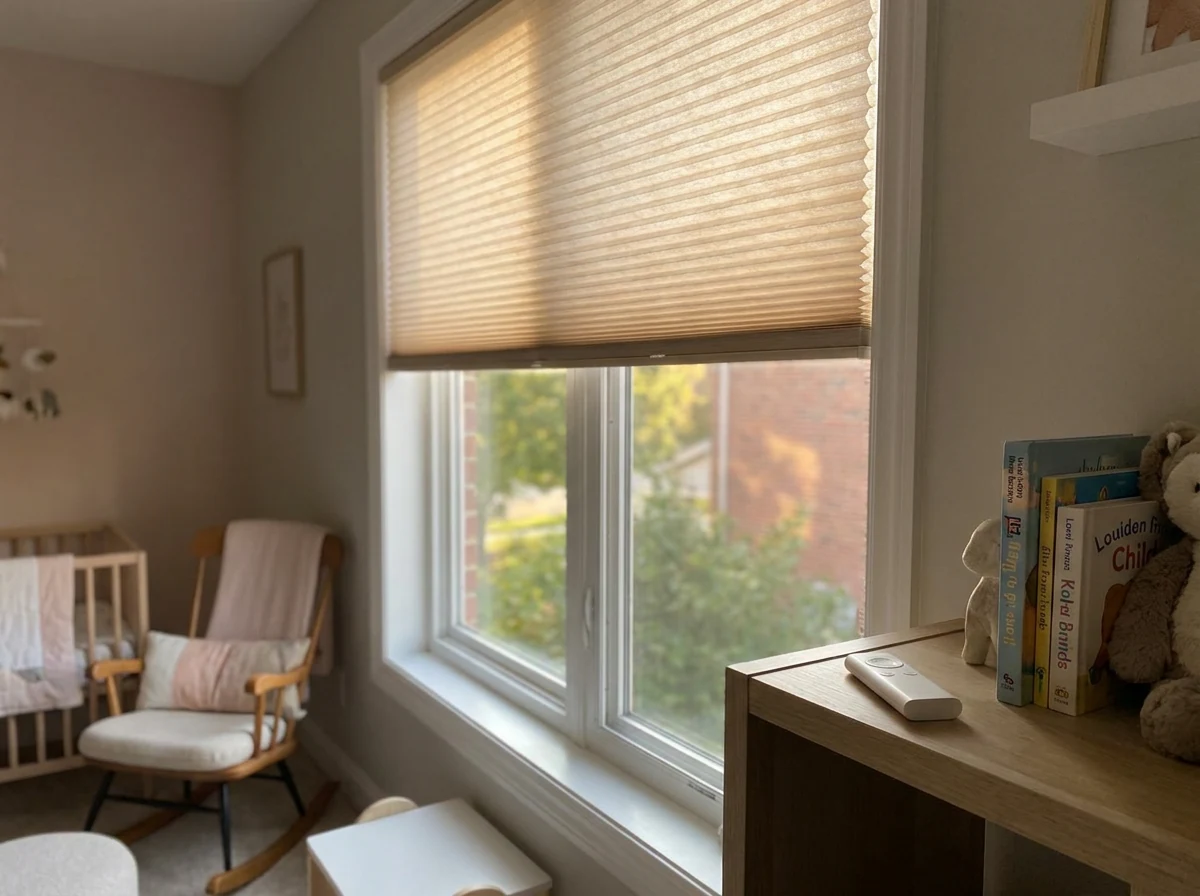
A soft, even glow through the cell wall. It keeps a shaded room feeling bright on a grey Cape winter morning rather than closing it down.
Blockout cell
The same honeycomb with a blockout liner inside the cells. Bedrooms that need dark and warm at the same time — a combination a plain roller cannot give you.
Top-down / bottom-up
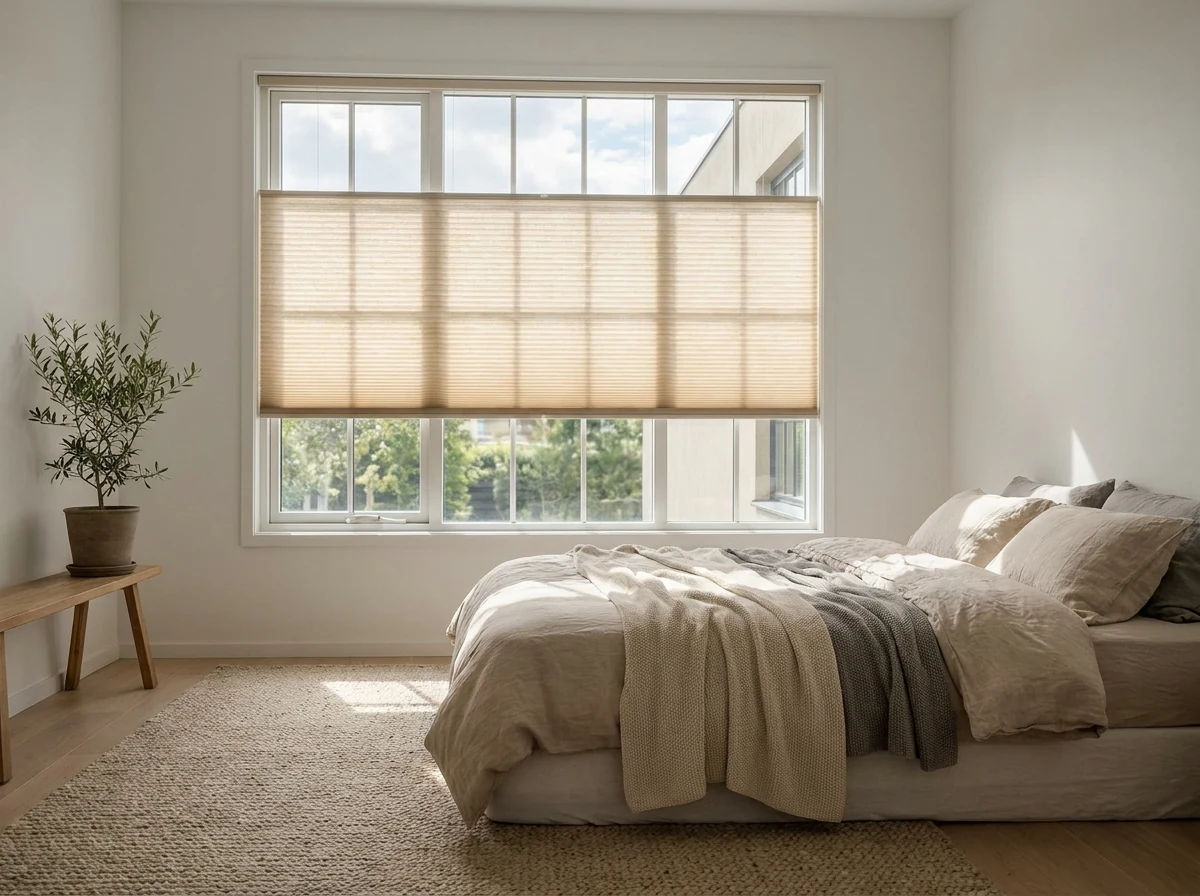
Two rails, so you can drop the blind from the top for daylight while keeping the lower half closed for privacy. Genuinely useful on a street-facing or overlooked window.
Cordless and motorised
A cordless lift that stays where you leave it, or a motor on a switch or remote. Both remove the hanging loop entirely, which matters in children’s rooms.
Fitting notes
- Inside mount wherever the reveal allows — a cellular blind performs best when the cells sit close to the glass with as little bypass around the edges as possible
- Side channels available where a room is being asked to hold heat seriously, closing the gap down the edges
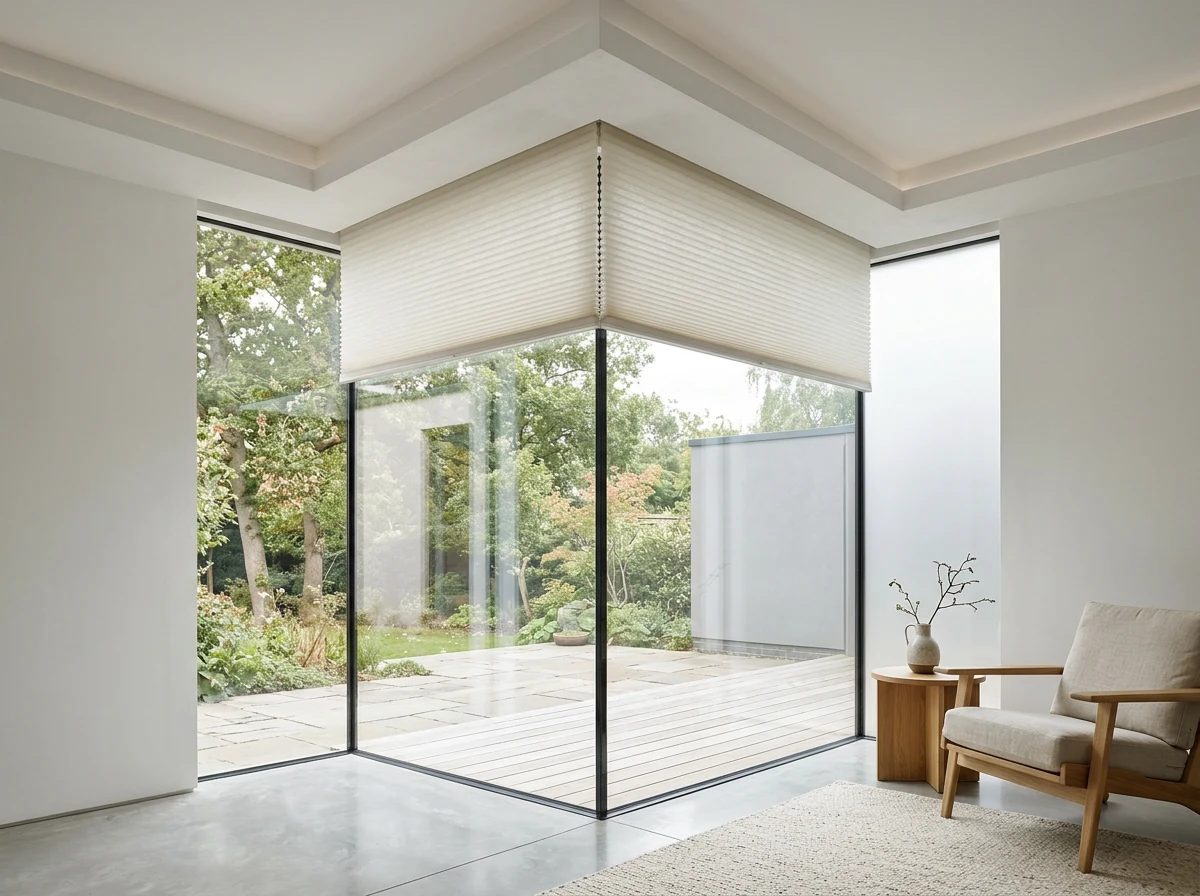
- Slim stack when raised — the pleats compress to a shallow band under the headrail, so the window still reads open
- Bottom rail colour matched front and back, because a cellular is seen from outside as well as in
- Available in shaped and skylight formats for gable glass and roof lights, tensioned so the fabric stays flat
- Cordless or motorised operation recommended as standard in nurseries and children’s rooms
The heat you lose here goes out of the glass, not the walls
Bishopscourt sits in the highest-rainfall corner of the Peninsula, under a canopy that keeps direct sun off many elevations for most of the day. Houses here are generally large, generously glazed, and built with thick walls that hold their temperature well. The weak point is almost always the window: a big single-glazed opening in a shaded south-facing room bleeds warmth all through a wet July.
A cellular blind is the least invasive fix for that. It changes nothing structural, it goes into the existing reveal, and it puts an insulating layer exactly where the loss is happening. In a room you actually use in winter — a study, a TV room, a bedroom on the shaded side — it is usually the first thing we suggest.
Cellular blinds for the cold rooms across the southern suburbs
Newlands takes the country’s highest rainfall and Bishopscourt isn’t far behind, but shaded, chilly rooms turn up everywhere in this pocket of the Peninsula — older houses in Claremont and Rondebosch included, and the cooler corners of a Constantia estate.
Cellular honeycomb pricing, as a guide
Guides, per square metre installed: R1,500 to R2,800 hand-operated, R3,000 to R4,800 motorised. Position inside those bands is mostly cell structure and fabric — single-cell light-filtering cheapest, double-cell blockout or a top-down-bottom-up head dearest.
The premium over a plain roller buys insulation as well as shading: the trapped air in the cells is the product, and that construction costs more per running metre than a flat sheet. On a cold, shaded south room in a Cape winter that is usually money well spent; on a warm north window it may not be, and the consultant will say so. Small openings attract a minimum, and each figure is written down after the free measure.
Worth knowing before the measure
Will a cellular blind actually make a difference we can feel?
In a room with a lot of glass and no direct sun, yes — most noticeably as the absence of the cold draught that rolls off a big window in winter. We will not put a percentage on it, because the honest answer depends on your glazing, the room and how you use it. What we can say is which of your rooms are the good candidates, after seeing them.
Can we still see out?
Through a light-filtering cell you get a soft glow, not a view — the cell wall diffuses everything. If the window is one you want to look through, we would pair a cellular on the cold rooms with a sunscreen roller or a venetian on the ones with the garden view.
Do the cells get dusty inside?
Very little gets into a bonded cell. A vacuum on a low setting with a brush head along the face is the whole maintenance routine.
Are they suitable for a bathroom?
Usually not our first choice — a sealed aluminium venetian or a moisture-tolerant roller handles constant steam better. We would rather tell you that up front than sell you a blind that ends up limp in two winters.
Other things we fit in Bishopscourt

Which rooms are the cold ones?
Walk the consultant through the house and point at the rooms you avoid in winter. That conversation is usually enough to decide where a cellular earns its place and where a roller is the better buy.
Tell us about your windows
Tell us which rooms stay cold and roughly how many windows are involved. One of our expert consultants will contact you shortly to arrange your free in-home measure.
- No obligation, no call-centre — a consultant calls you directly
- Fabric samples brought to the measure, not just a screen swatch
- Written, itemised quote before anything is ordered