Bishopscourt Blinds / Products / Folding-arm awnings
Shade over the stoep in summer. Gone by the time you want the winter sun.
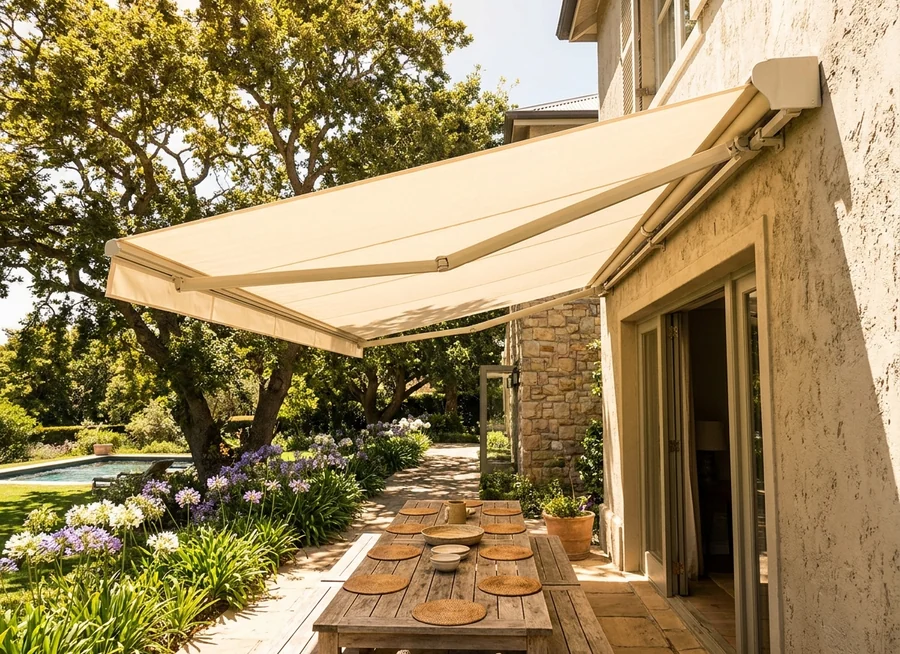
A fabric canopy carried on folding aluminium arms, extending clear of the wall with nothing standing on the paving. Full-cassette housings and wind sensors, specified for a wet, gusty Cape garden.
No posts, no footings, nothing left standing when it rains
A folding-arm awning mounts to the wall or the fascia and pushes its canopy out on sprung articulated arms. Because the arms carry the load, there are no legs on the paving — you keep the whole terrace usable, and the furniture layout is not built around a frame. Retract it and the arms fold flat back to the wall.
It is the difference between a permanent roof and shade you can switch off. In Bishopscourt that matters both ways round: you want the canopy out over a January lunch, and you want it gone in July when the low winter sun through the oaks is the only warmth the terrace gets all day.
Three specification decisions that matter
Open-arm or full cassette
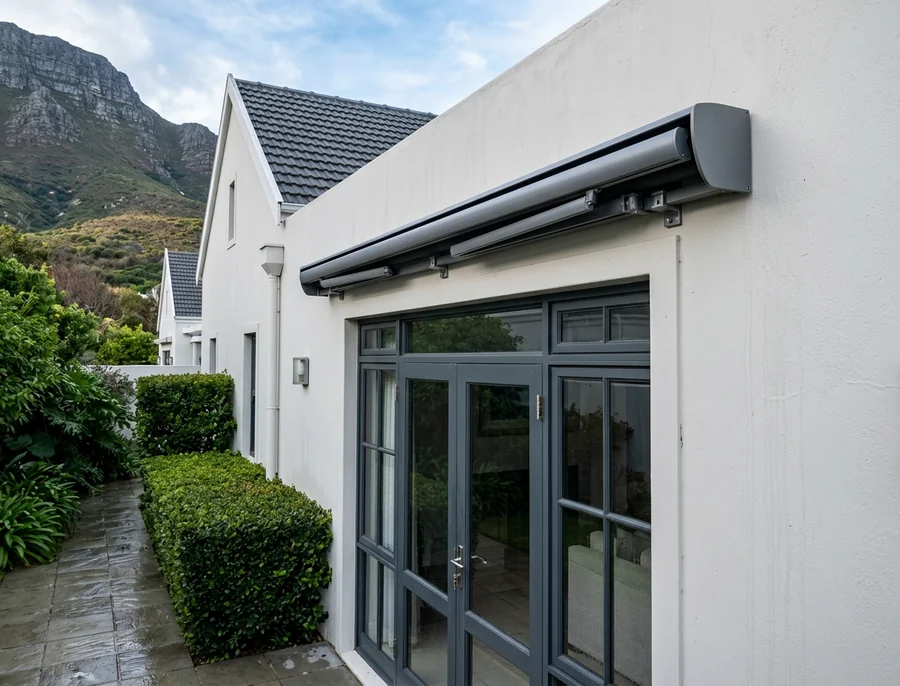
An open awning leaves the folded fabric and arms exposed. A full cassette closes them into a sealed aluminium housing when retracted. Under a leafy, dripping canopy we recommend the cassette almost every time — it is what keeps leaf litter, damp and bird mess off the folded fabric.
Motor and wind sensor
A tubular motor on a remote or wall switch, plus a wind sensor that retracts the awning automatically when gusts pass the set threshold. This is the single most important option here, because an awning only survives wind if it is already closed.
Fabric and pitch
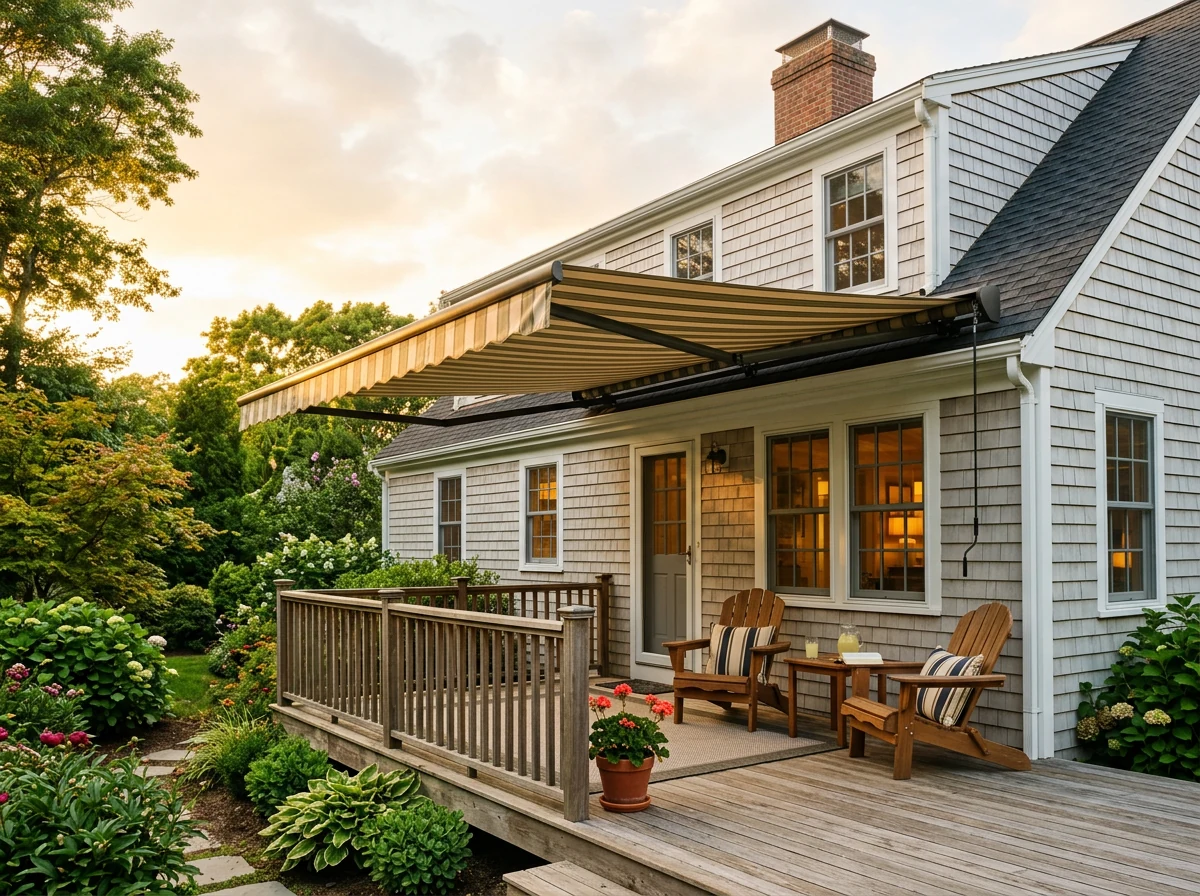
Solution-dyed acrylic canopies in plain or striped weaves, set at a pitch that sheds water rather than pooling it. The pitch is decided on site against your wall height and how far the canopy has to reach.
Fixing substrate
Brick, plastered brick, timber fascia or a concrete beam all take a different bracket. The consultant checks what is actually behind the plaster at the measure — an awning pulls hard on its fixings and a guess is not good enough.
The other half of an outdoor shading brief
- Zip screens run a tensioned mesh in a zipped side channel, so the fabric holds flat in wind instead of flapping — the practical way to close the exposed side of a stoep
- They cut low sun, wind-driven rain and insects while you can still see out to the garden
- Manual crank or motorised, with the same remote or switch as the awning where you want one control for the whole terrace
- Mesh openness chosen for how much view you want to keep versus how much wind you want stopped
- Roller shutters are also available as an external shading layer — rigid aluminium slats that roll down outside the glass for sun, heat and glare control. These are shading shutters, not security-rated shutters; that is a different product, available on request
- Everything outside gets powder-coated, corrosion-resistant hardware as standard in this microclimate
The south-easter, the rain, and a canopy that drips for days
Two things break outdoor shading in this part of Cape Town. The first is wind: the south-easter arrives fast, and an extended awning is a sail. The fix is not a heavier awning — it is an awning that closes itself, which is why we specify a motor plus wind sensor on most Bishopscourt installations rather than trusting that somebody is home.
The second is water. This suburb takes some of the highest winter rainfall in the country, and under a mature canopy the trees keep dripping long after the rain stops. Fabric that folds away wet into an open arm assembly will not thank you for it. A full cassette, a pitch that sheds rather than pools, and hardware chosen for damp are what make the difference between an awning that lasts and one that looks tired in three seasons.
Folding-arm awnings across the southern suburbs
A motor-plus-wind-sensor awning suits a Constantia wine-estate terrace as much as a Rondebosch verandah edge. We fit and quote awnings across Constantia, Newlands, Claremont and Rondebosch, always specified for the wind and rain of that particular garden.
Folding-arm awning pricing, as a guide
Guides run by the square metre of projection, installed — the shade actually thrown by the arms, not the wall width behind them. Crank-operated: R3,500 to R5,500, with an open or semi-cassette mounting cheapest and a full cassette, which seals fabric and arms away from the weather, dearest. Motorised with a wind sensor: R5,500 to R7,500.
In a wet, oak-shaded corner of the city the cassette is rarely the place to economise, and we will say so at the measure rather than after the first winter. Compact awnings attract a minimum, since brackets, arms and crew time do not halve when the projection does. What you fix into can shift the number as well. The written quote follows the free measure.
Worth knowing before the measure
Will it survive the wind here?
Within its rated wind limit, and only reliably if it retracts before the gust arrives. That is the honest answer, and it is why we push motor-plus-wind-sensor so hard. No fabric awning on folding arms is a storm structure, and anyone telling you otherwise is setting you up for a replacement.
Can we leave it out overnight?
We would not. Even with a sensor, the sensible habit is to retract it when you go in — the cassette exists precisely so that closing it is the low-effort option. A motorised awning with a timer can do it for you.
How far can it project from the wall?
Further than most people expect, but the reach is limited by the wall height and the pitch needed to shed water. The consultant measures the wall, the door head and the paving fall on site, then quotes the projection your position will actually take.
Do you fit awnings over a pool or between two walls?
Between walls is usually straightforward. Over water we would check the fixing wall and the prevailing wind carefully first — sometimes a zip screen or a roller shutter on the exposed side is a better answer than a bigger canopy.
Other things we fit in Bishopscourt
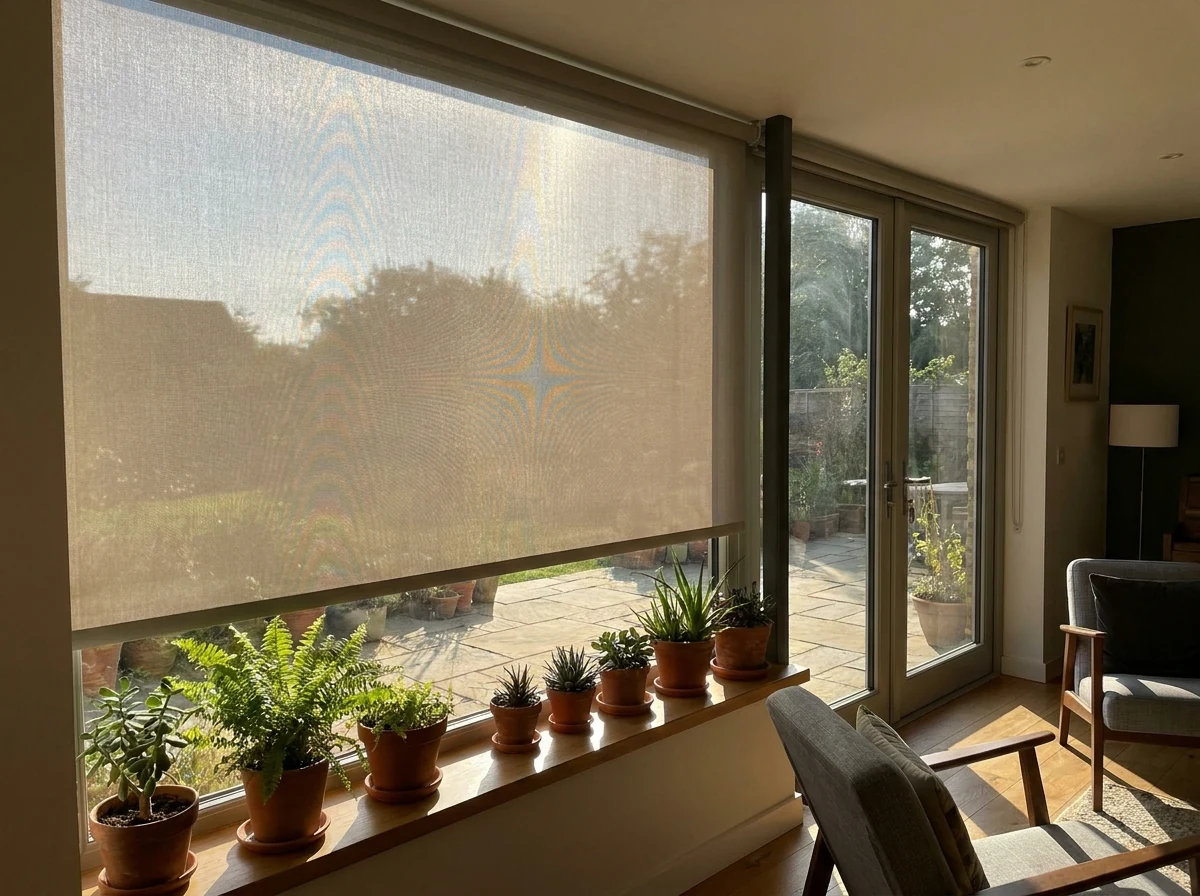
Roller Blinds
Cut the glare inside while the awning handles outside.
Explore →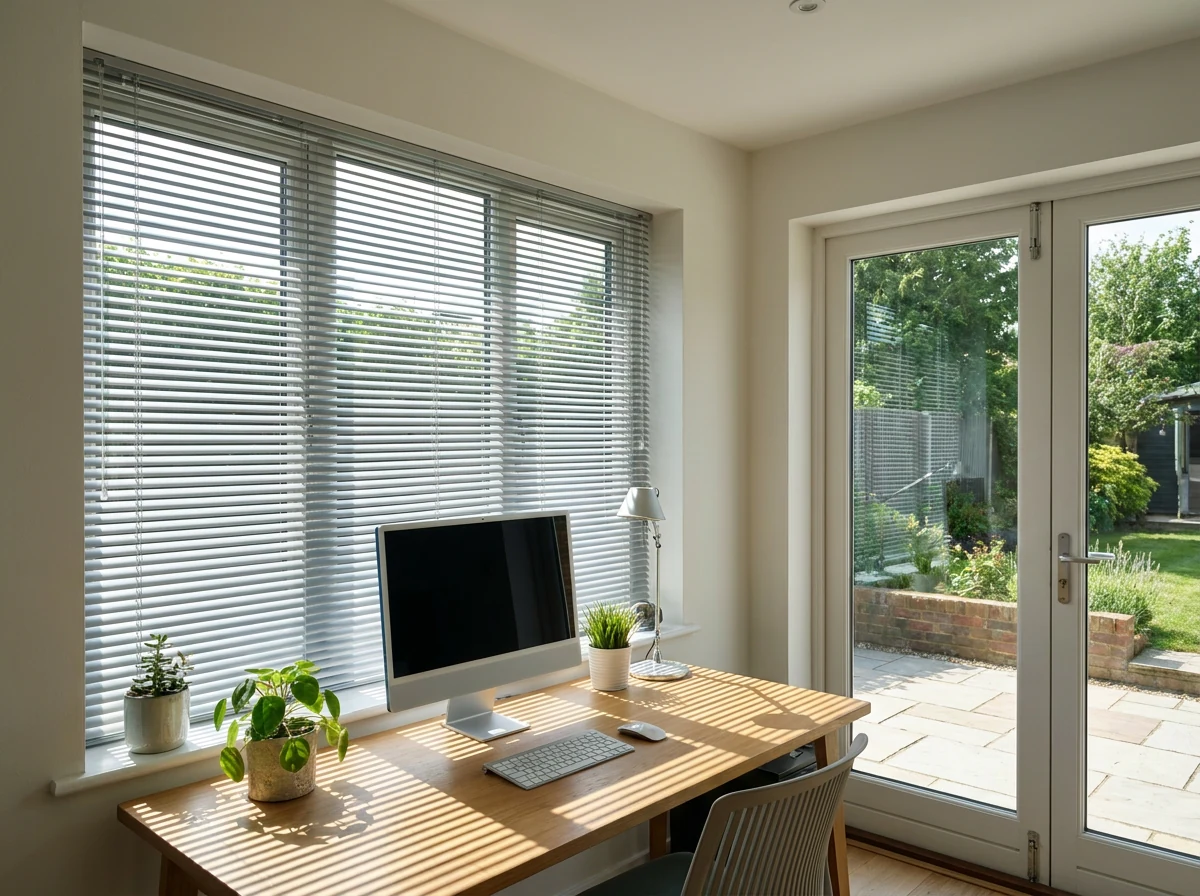
Venetian Blinds
Sealed aluminium slats for damp, garden-facing rooms.
Explore →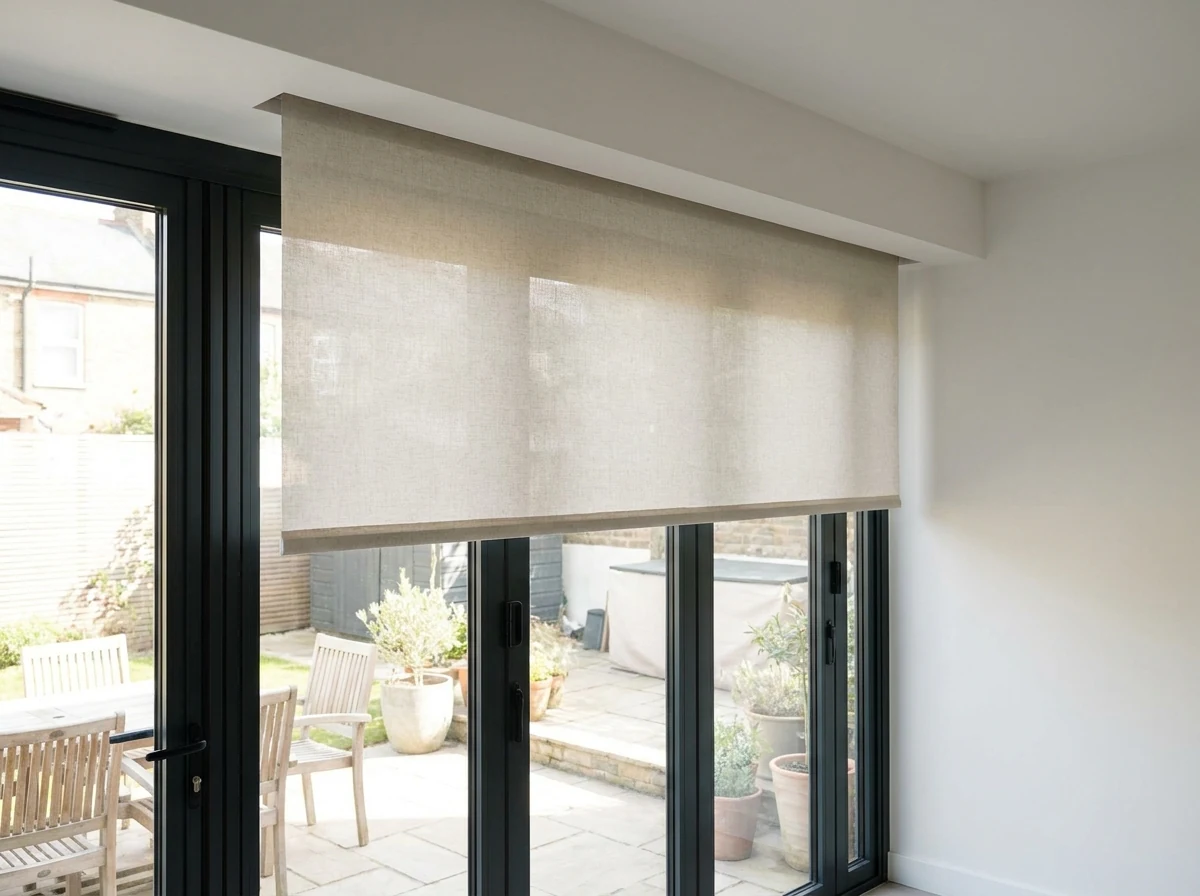
Concealed & Recessed
Indoor shading that vanishes into the ceiling.
Explore →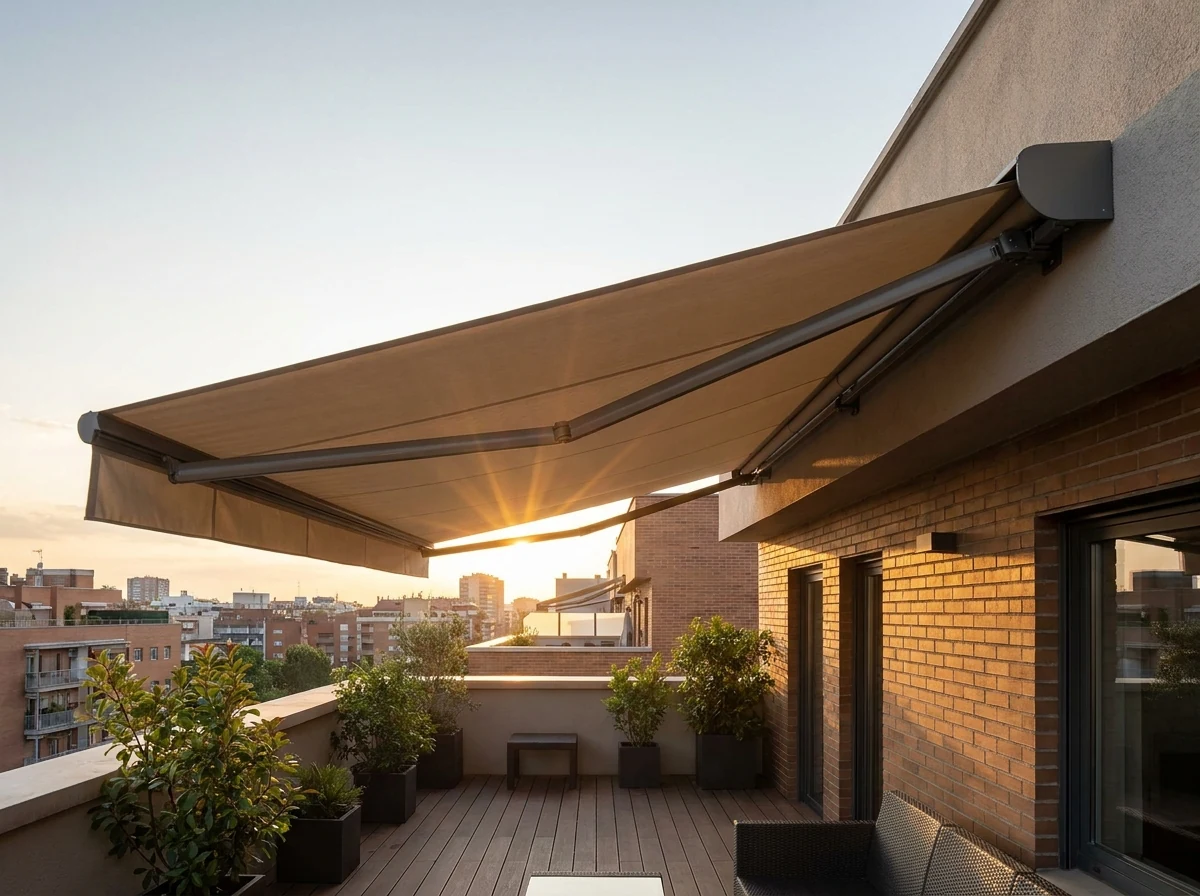
Motorisation
One remote for the awning, the screens and the blinds.
Explore →Getting the projection and the pitch right needs the wall
There is no way to quote an awning honestly from a photograph. The free measure covers wall height, fixing substrate, prevailing wind and where the water is meant to run.
Tell us about your windows
Tell us roughly how big the terrace is and which side the sun and the wind come from. One of our expert consultants will contact you shortly to arrange your free in-home measure.
- No obligation, no call-centre — a consultant calls you directly
- Fabric samples brought to the measure, not just a screen swatch
- Written, itemised quote before anything is ordered