Bishopscourt Blinds / Products / Concealed & recessed blinds
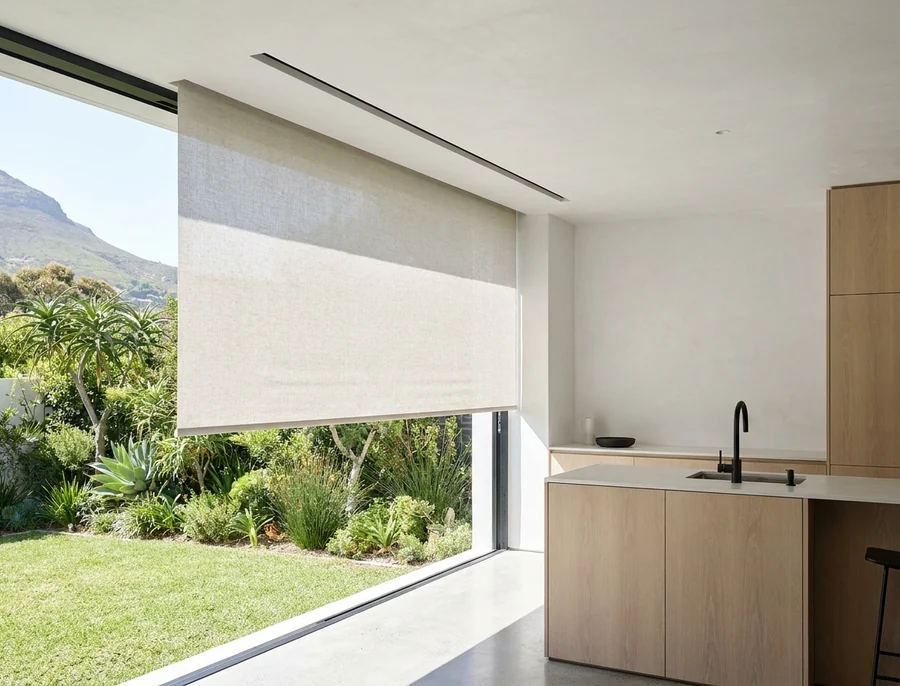
The blind is there. The blind box is not.
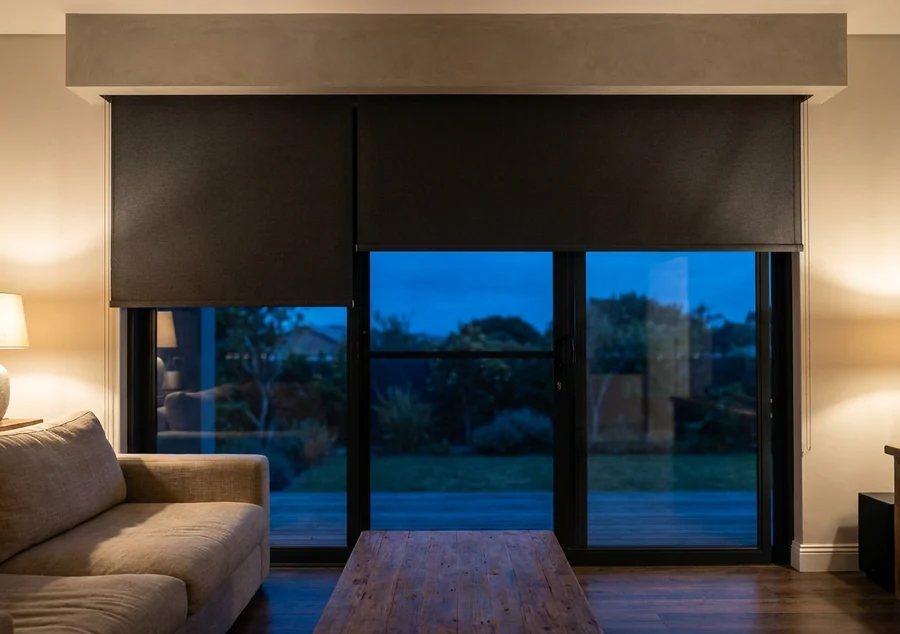
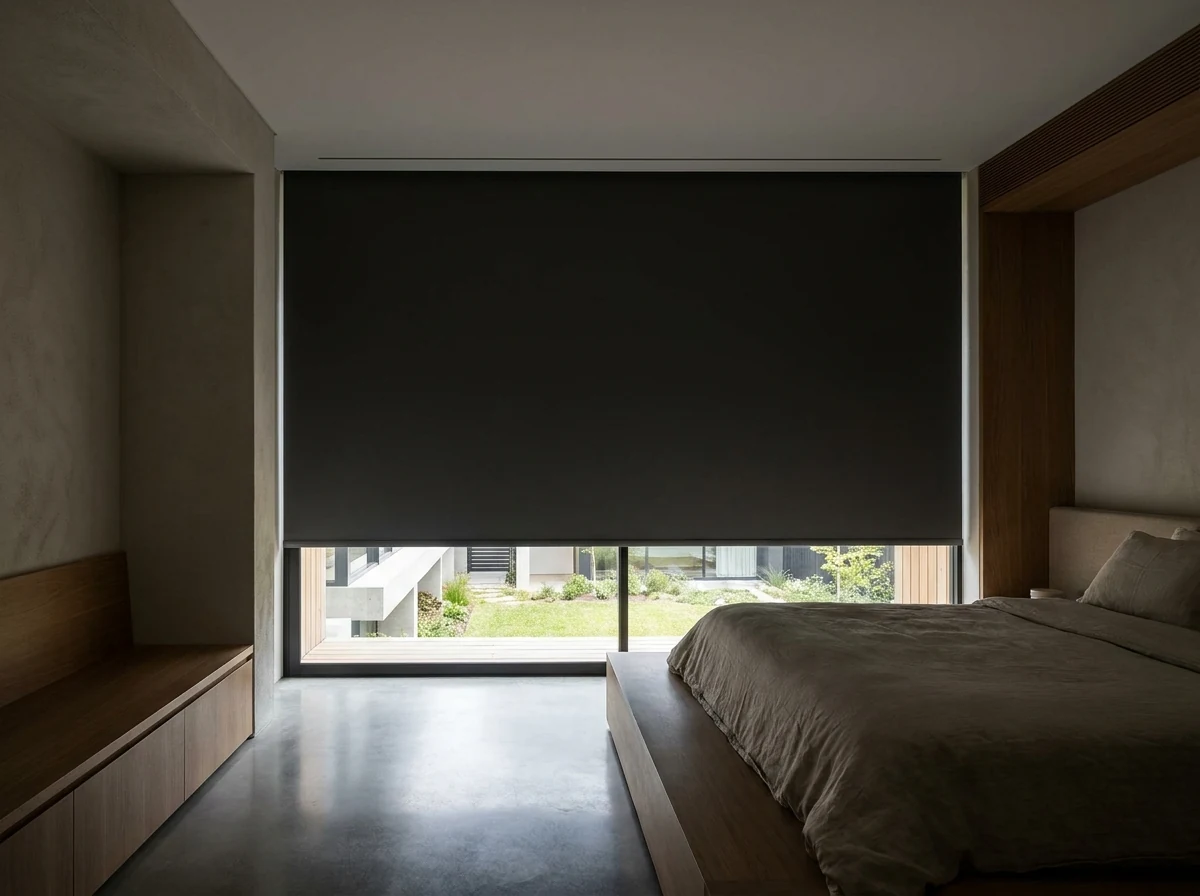
Fabric that drops out of a slim slot in the ceiling or a plastered bulkhead. Raised, the window shows nothing but glass and frame — no headrail, no bracket, no chain down the glass.
A roller blind with the hardware buried in the ceiling
Mechanically this is still a roller: a tube, a motor and a flat sheet of fabric. The difference is where the tube lives. Instead of a bracket on the face of the wall, the tube sits inside a recess formed in the ceiling or in a dropped bulkhead, and only the fabric and a slim bottom bar come out of the slot.
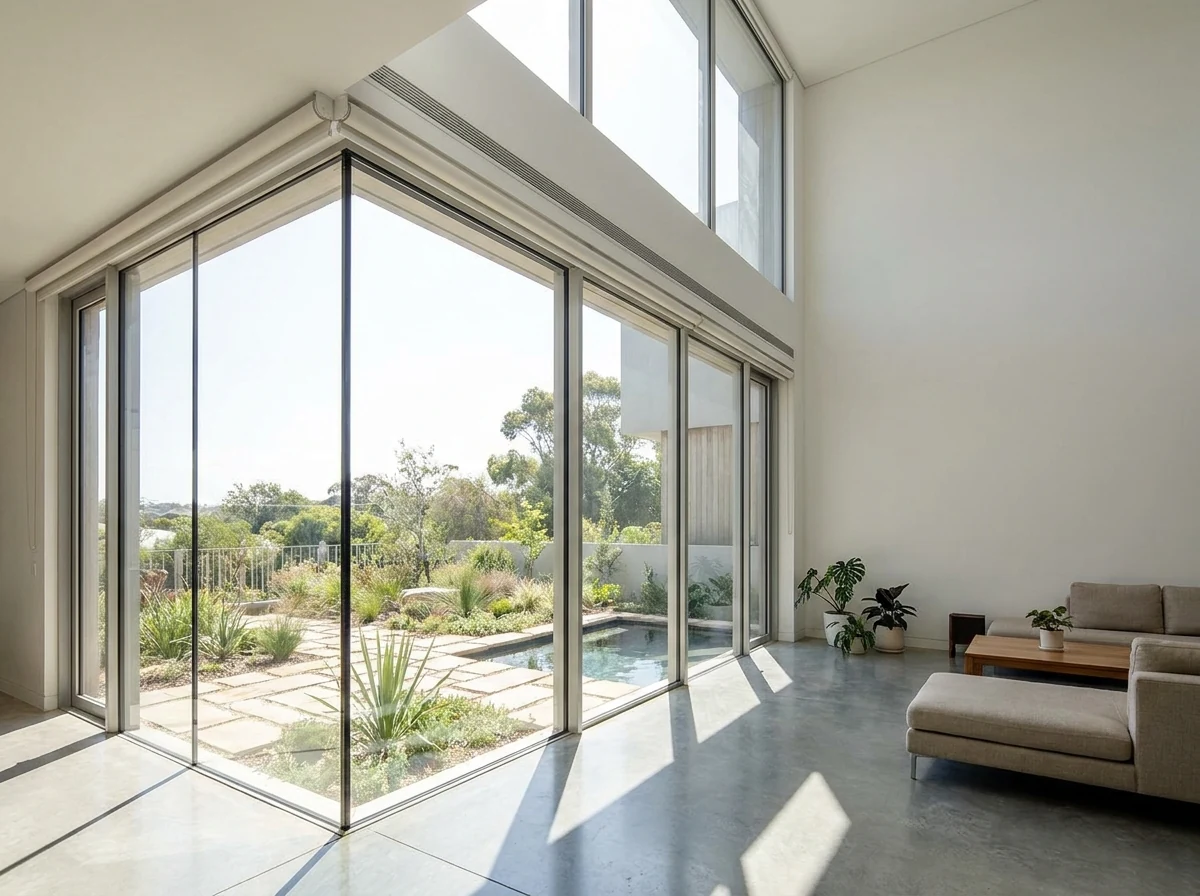
The effect is that the window stops having a blind at all when it is up. On a frameless corner or a double-volume glass wall — the kind of opening that a lot of newer Bishopscourt houses are built around — that is the whole point. Nothing interrupts the head of the glazing, and nothing competes with the view.
Building it in, or retrofitting it
Architect-spec, at drawing stage
If the house or the extension is still on paper, we give the architect or the builder the recess dimensions, the power position and the clearances before the ceiling is closed. This gives the cleanest result — a slot the exact width of the glazing with nothing improvised on site.
Retrofit bulkhead
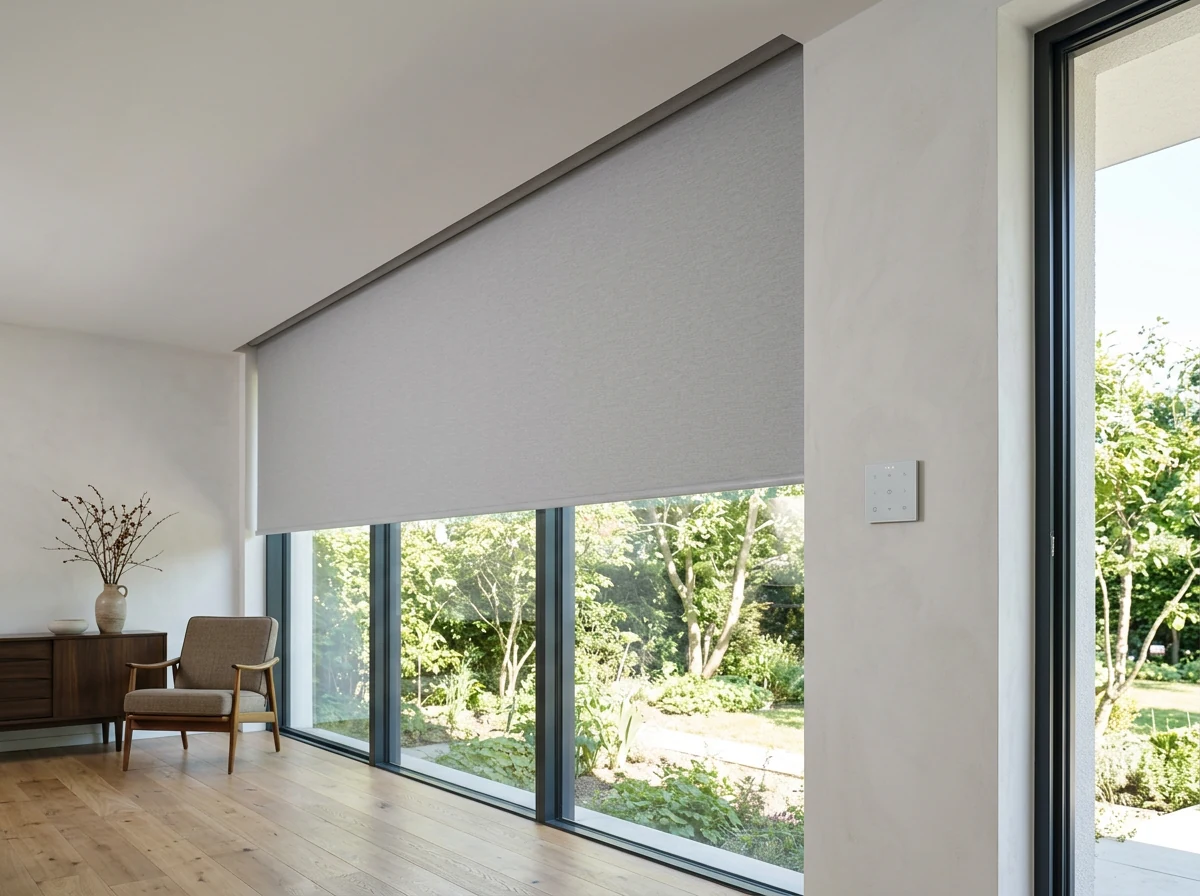
Where the ceiling is already up, a shallow plastered bulkhead is built across the head of the window to house the tube. Detailed properly it reads as a deliberate architectural line rather than a box stuck on afterwards.
Surface cassette
The middle option: a slim powder-coated cassette fixed to the wall or ceiling that encloses the tube and end brackets. Not invisible, but tidy, and far quicker than plastering work.
Multi-blind runs
Long glass walls take several tubes in one continuous recess, aligned so the fabric joins read as deliberate lines. The alignment is set out at the measure, not on fitting day.
What has to be right before the ceiling closes
- Recess width, depth and the slot opening, sized to your fabric drop and tube diameter — a slot that is too tight makes the fabric rub
- Power feed to the correct end of the recess, with an isolator that is reachable without a ladder
- Access for service — a removable panel or a demountable section, so a motor can be changed in ten years without breaking the ceiling
- Clearance from downlights, air-conditioning outlets and curtain tracks sharing the same head detail
- Fabric weight and tube diameter sized for the drop, because a long drop from a hidden tube has nowhere to hide deflection
- Bottom bar profile and colour, since it is the only part of the system anyone ever sees
Big glass, tall rooms, and no good place for a chain
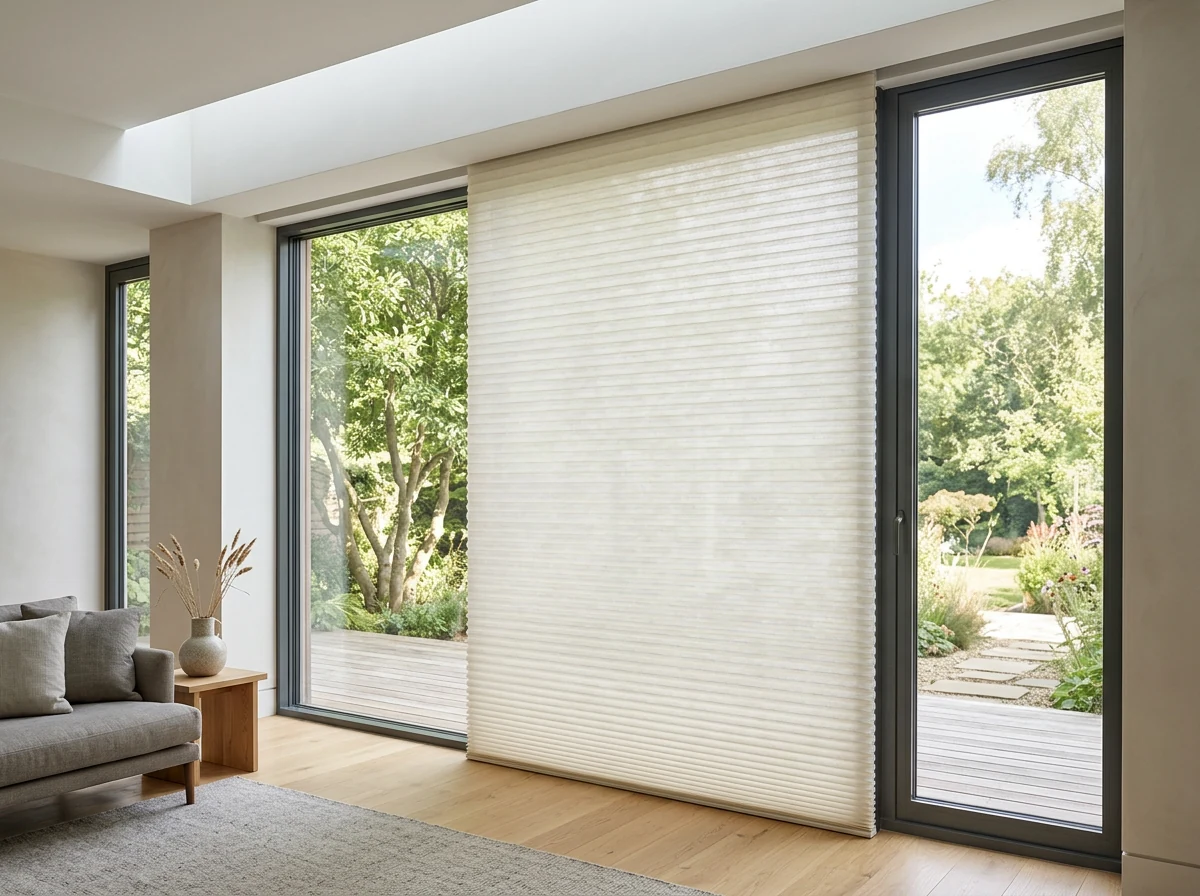
The double-volume glazed living space is close to a local signature: contemporary additions to older houses here are very often built around a full-height glass elevation looking into the garden. Those openings are exactly where a conventional blind struggles — a four-metre chain hanging down the glass is both unsightly and unusable, and a face-fixed headrail cuts across the top of the view you paid for.
Concealed systems solve both problems at once, which is why they are almost always motorised. There is no hand-reach into a ceiling slot, so operation is a wall switch, a remote or a phone. If you are building or renovating, tell us early: the cheapest version of this job by a wide margin is the one specified before the ceiling goes up.
Concealed and recessed systems across the southern suburbs
Double-volume glazing isn’t only a Bishopscourt signature — contemporary additions in Constantia, Claremont and Newlands lean on it too, and we plan concealed systems into new builds and renovations across Constantia, Newlands, Claremont and Rondebosch alike.
Concealed and recessed pricing, as a guide
Hiding a blind so nothing shows when it is raised is part joinery, part blind, and the guide reflects that: R1,600 to R3,000 per square metre installed hand-operated, R3,200 to R5,000 motorised. A ceiling void already framed with a pocket sits low in those bands; a bulkhead that must be formed, cut back or re-detailed sits high in them.
Two costs sit outside our rate, and better to know now than later. Building or ceiling work to create the recess belongs to the trade doing it, and a wired motor needs a power point at the head of the opening, which belongs to the electrician. Small openings attract a minimum. Book the free measure before the ceilings close if you can — the same job costs less planned than retrofitted.
Worth knowing before the measure
Can this be done in an existing house?
Usually yes, via a bulkhead or a surface cassette. A true in-ceiling recess needs the ceiling opened, so on a finished house we will normally propose the bulkhead and be straight with you about what the plastering and painting involves.
Do they have to be motorised?
In practice, yes. There is no sensible way to reach a chain inside a ceiling slot, and a hanging pull-cord would defeat the point of hiding the hardware. That also makes them a good child-safety answer, because there is no loop anywhere in the room.
What happens when the motor eventually fails?
It gets replaced — which is why we insist on a service access detail at specification stage. If a builder tells you the recess does not need access, that is a conversation to have before the ceiling is closed, not after.
Can we run several blinds off one control?
Yes. A run of blinds along one glass wall can move together on a single channel, with individual control kept available for when one window needs something different.
Other things we fit in Bishopscourt
Building or renovating?
Get us in before the ceiling closes. We will give your architect or builder the recess dimensions, the power position and the service access detail in writing, at no charge.
Tell us about your windows
Tell us whether the ceiling is still open or already finished, and roughly how wide the glazing runs. One of our expert consultants will contact you shortly to arrange your free in-home measure.
- No obligation, no call-centre — a consultant calls you directly
- Fabric samples brought to the measure, not just a screen swatch
- Written, itemised quote before anything is ordered