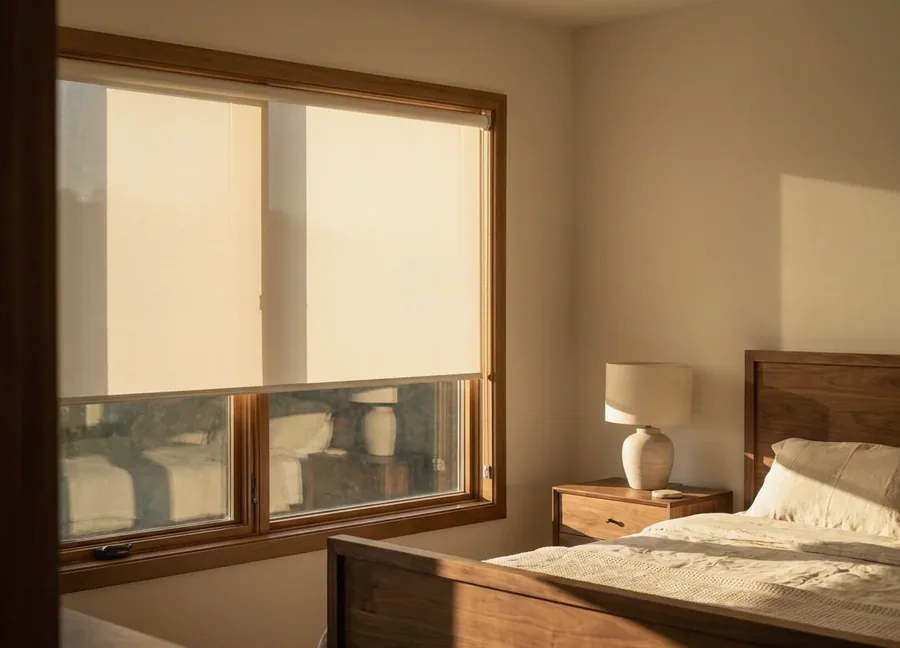
Bishopscourt Blinds / Products / Roller blinds
Roller blinds, specified for Bishopscourt light
One smooth sheet of fabric on a tube — no folds, no stacking, nothing to gather dust. Blockout, sunscreen and double-roller day-and-night, all made to your measurements.
A single flat sheet on a tube — that is the whole idea
A roller blind is one continuous piece of fabric wound onto an aluminium tube. Lower it and you get a flat, unbroken plane across the glass. Raise it and the whole thing disappears into a roll no thicker than your wrist. There are no folds, no pleats and no stacked slats, which is exactly why it works so well on the wide, clean openings that dominate Bishopscourt houses.
That simplicity is also what makes it the most fabric-driven product we fit. The hardware barely changes between one roller and the next; the fabric is what decides whether a room goes dark, keeps its view, or holds heat out of west-facing glass. Which is why the consultant brings physical samples to the measure rather than asking you to choose off a screen.
Which roller belongs on which window
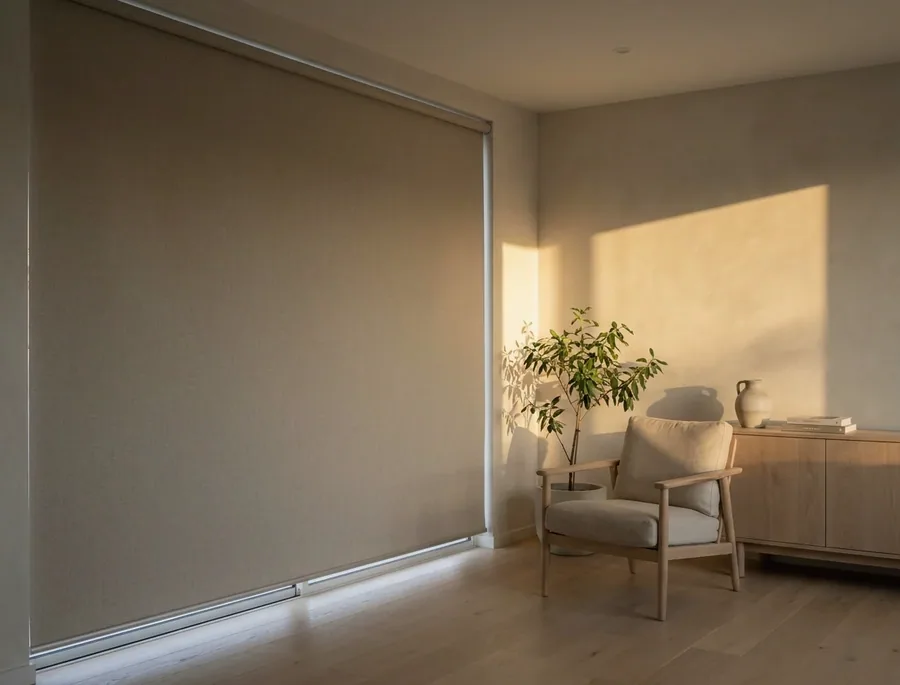
Blockout
A coated fabric that stops light rather than filtering it. Bedrooms, nurseries and media rooms. Fitted with a side channel or generous overlap it also cuts the cold radiating off big glass on a wet July morning.
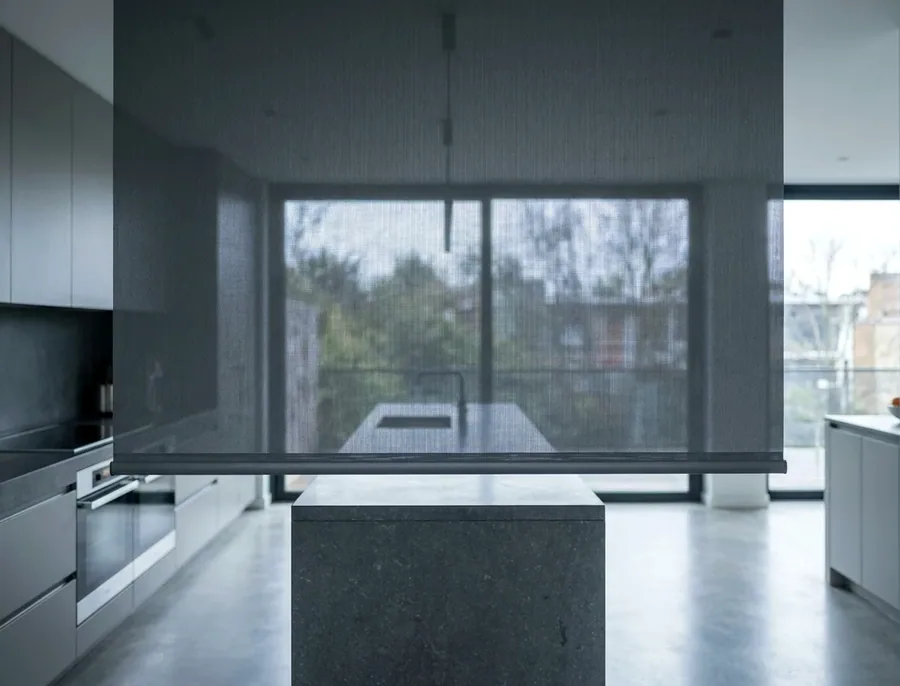
Sunscreen
An open mesh weave with a stated openness factor. It knocks back glare and UV while you still read the garden through it — the right answer for living-room glass that faces the lawn and the oaks.
Double roller (day & night)
Blockout and sunscreen on one bracket, each on its own tube. View and glare control by day, full privacy after dark, one clean fitting at the head of the window.
Blackout-lined dual
Where a room needs both but the opening is too wide for two full tubes, we split the run and align the joins so the blinds read as one continuous line across the glass.
The parts that decide whether it still works in five years
- Chain or cord operation with a child-safe tensioner fitted as standard — or a wand, cordless spring or motor where a loop is not wanted at all
- Powder-coated brackets and sealed components on anything going into a bathroom, scullery or a cold south-facing room
- Fascia, cassette or open-roll head finish, chosen to suit the ceiling detail rather than whatever the bracket happens to be
- Reverse or standard roll, decided on site — a reverse roll clears a deep sill or a window handle that a standard roll would foul
- Side channels or a generous overlap on bedroom blackouts, because the light leak down the edges is what actually wakes people up
- Fabric weights matched to drop — a four-metre drop needs a different weight and tube diameter to a bathroom window, and we size it rather than guess it
Dappled canopy light is a different problem to open sun
Most shading advice assumes an open sky. Bishopscourt does not have one. Under a mature oak and indigenous canopy the light arrives broken and moving — bright patches that shift across a room all afternoon, then a long, low, hard glare when the sun finally drops below the branches. A blockout roller solves that by removing the window entirely, which is rarely what you want in a living room.
In practice we spec sunscreen on the garden-facing glass so the view survives, blockout in the bedrooms, and a double roller wherever a room has to do both jobs at different times of day. On the damp, shaded southern elevations we lean towards sealed-finish fabrics and corrosion-resistant hardware rather than anything that will hold moisture through a Cape winter.
Roller blinds across the southern suburbs
Blockout, sunscreen and double-roller specifying isn’t only a Bishopscourt conversation — the same fabric decisions come up on vineyard-facing glass in Constantia, forest-shaded windows in Newlands, balconies in Claremont and open eastern light in Rondebosch.
Roller blind pricing, as a guide
Pricing is worked out by the square metre, installed, and what follows is a guide. Chain, cord or spring rollers come in at R1,000 to R1,600; simple blockout occupies the lower part of that, while a tight-openness sunscreen on garden glass, or two fabrics on a single head, occupies the upper. Fit a motor and the guide is R2,500 to R3,800.
Bishopscourt houses shift that in two ways. There are many little windows, and a little one absorbs nearly all the labour and hardware of a big one, so a minimum applies below roughly a square metre. Side channels, wider face mounts and heavier tubes for long drops each appear on their own line. Firm numbers follow the free measure.
Worth knowing before the measure
Will a sunscreen roller give us privacy at night?
No, and any supplier who says otherwise is selling you something. A mesh works by transmitting light — during the day you see out because it is brighter outside, and at night that reverses. If the window needs both, a double roller carrying sunscreen and blockout on the same bracket is the honest answer.
How dark does blockout actually go?
The fabric itself passes no light. What you notice is the gap around the edges, so on bedrooms we quote side channels or a wider outside-mount overlap where the reveal allows. Say “this room needs to be properly dark” at the measure and the consultant will spec for that rather than for a tidier-looking fit.
Can a roller cover a whole glass wall in one piece?
Up to a point — beyond a certain width the tube deflects and the fabric starts to track sideways. On wide openings we either step up the tube diameter and fabric weight or split the run into aligned sections. The measure decides which, because it depends on your actual width, drop and fixing substrate.
Do you fit roller blinds outside, on a patio?
For an outdoor position we would normally specify a zip screen instead — the mesh runs in a zipped side channel so it holds taut in wind rather than flapping. An indoor roller fabric and bracket set is not built for weather.
Other things we fit in Bishopscourt
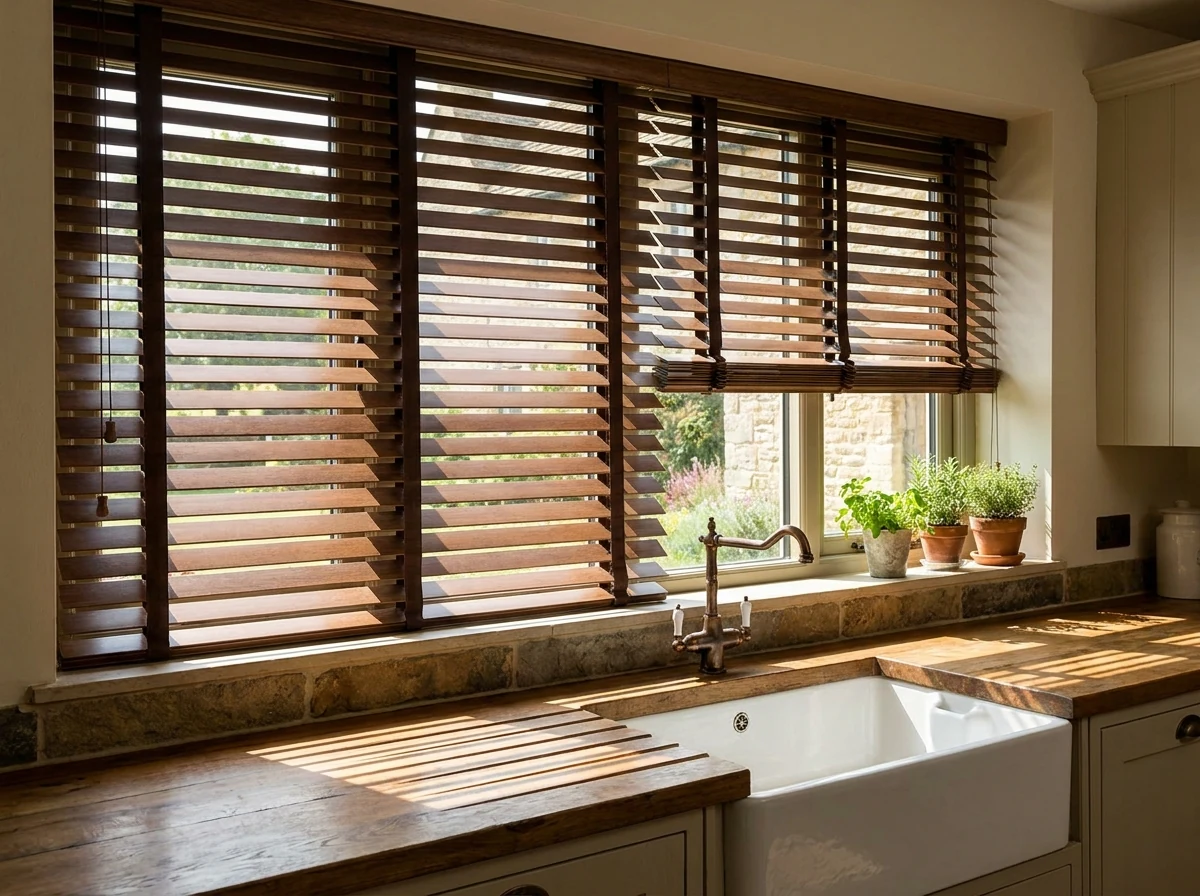
Venetian Blinds
Tilt the light rather than stop it — timber or sealed aluminium slats.
Explore →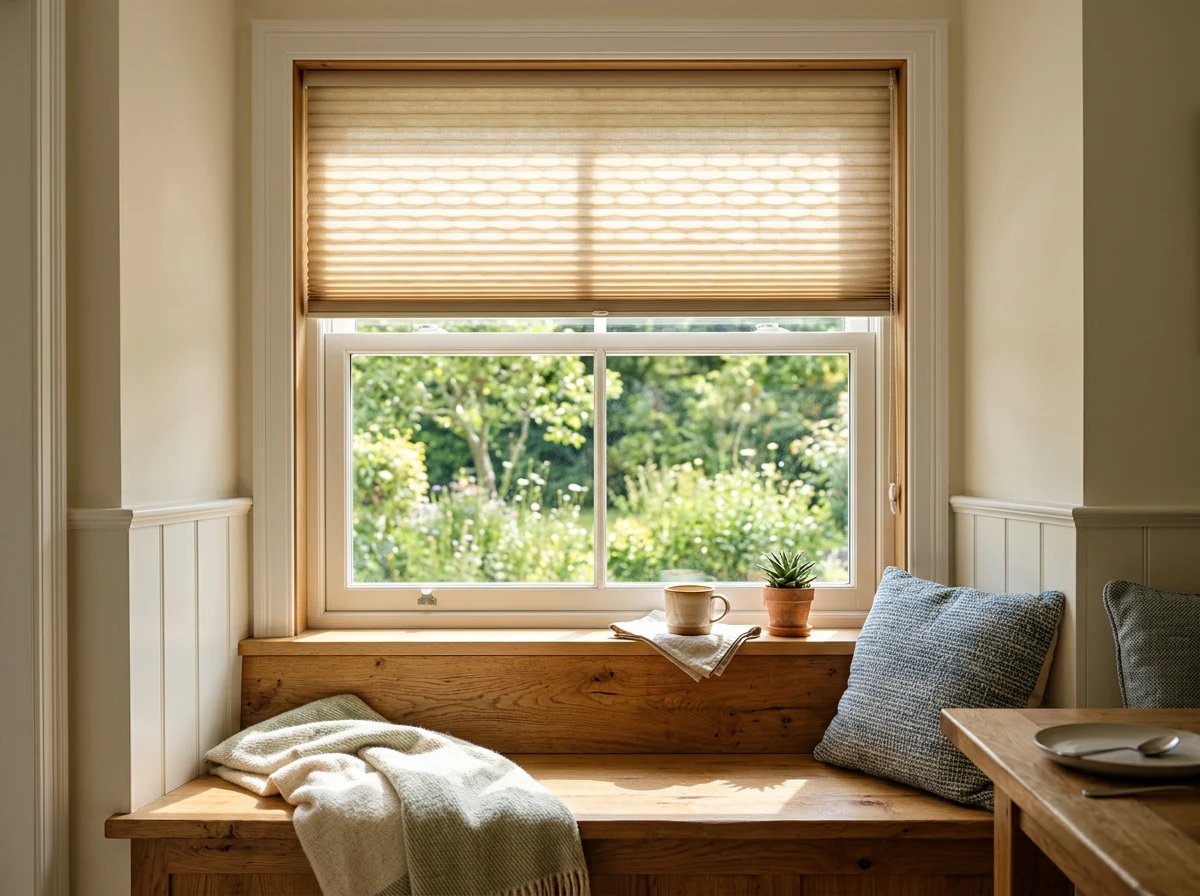
Cellular Honeycomb
Air cells at the glass — the warmest option for cold, shaded rooms.
Explore →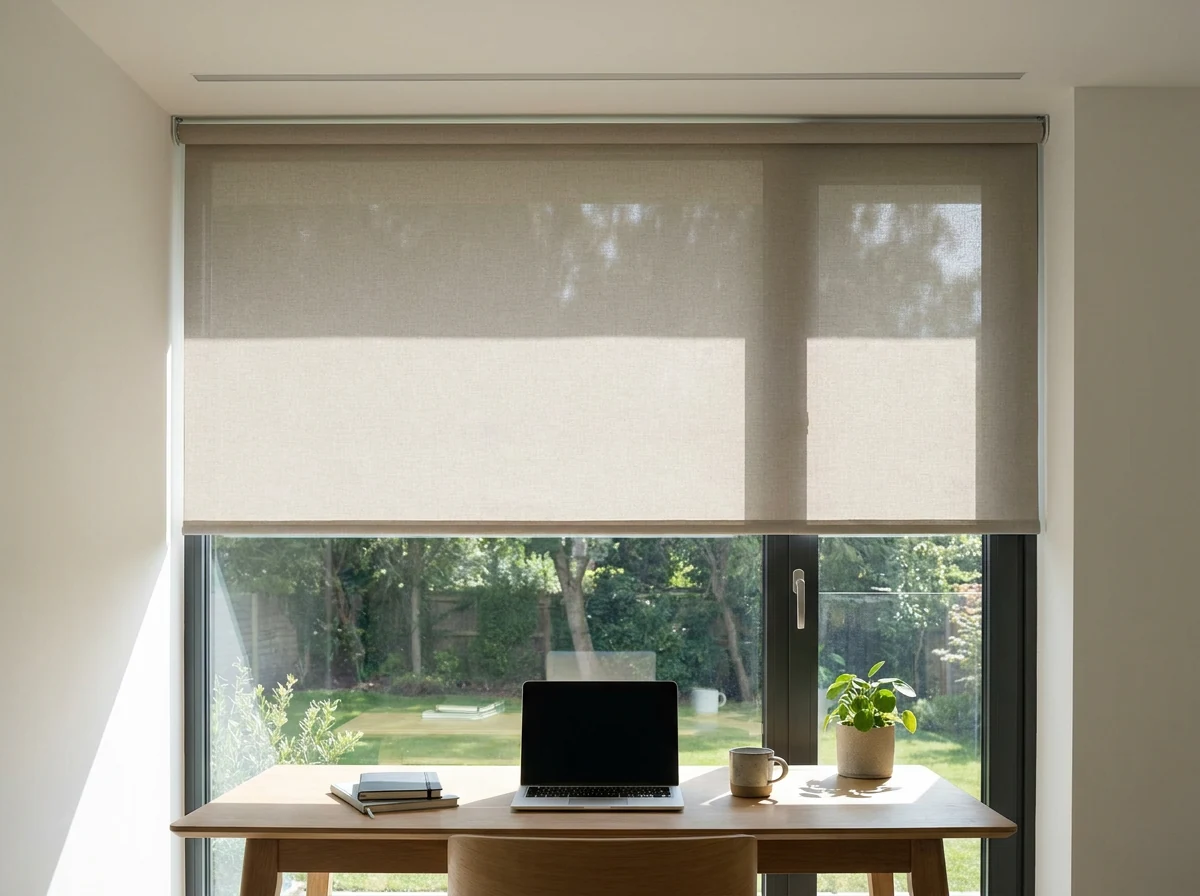
Concealed & Recessed
The same roller, hidden in the ceiling line.
Explore →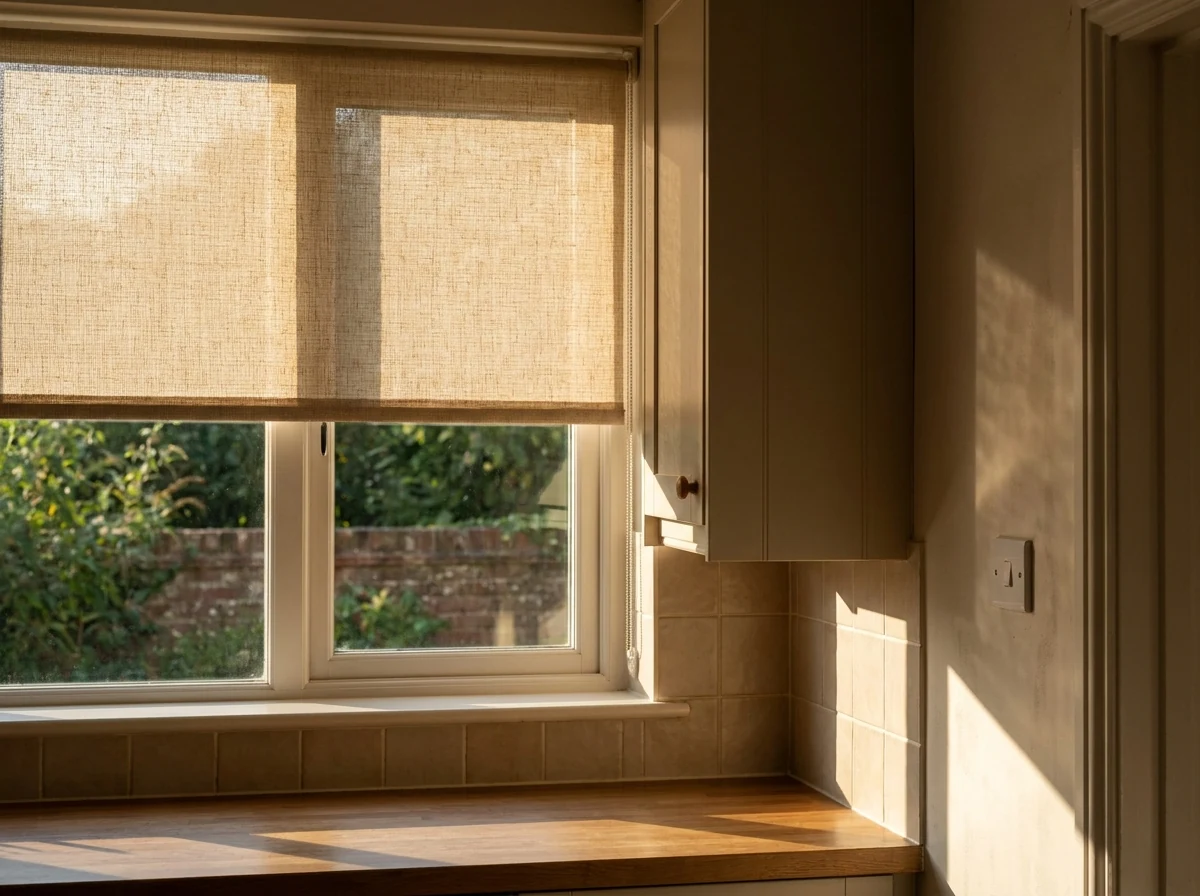
Motorisation
Wall switch, remote or phone — and timed scenes for the west glass.
Explore →Not sure which fabric your rooms need?
That is exactly what the free in-home measure is for. A consultant reads the light in each room, brings physical samples, and puts a written price against every window.
Tell us about your windows
Tell us which rooms you are looking at and roughly how many windows. One of our expert consultants will contact you shortly to arrange your free in-home measure.
- No obligation, no call-centre — a consultant calls you directly
- Fabric samples brought to the measure, not just a screen swatch
- Written, itemised quote before anything is ordered